
When Retirement Means Enlisting: Old Man’s War
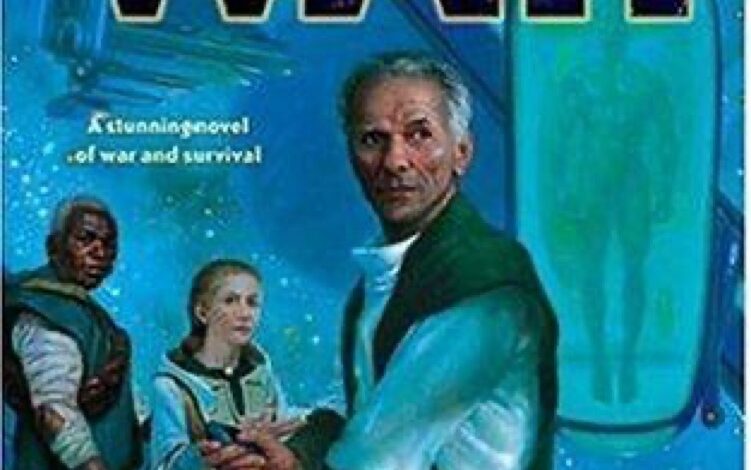
So here’s a premise that made me stop scrolling: what if the best soldiers weren’t young hotshots fresh out of boot camp, but 75-year-old retirees with nothing to lose? John Scalzi’s Old Man’s War has been sitting at the top of military sci-fi recommendations for two decades now, and I kept seeing the same debate play out across forums — is it a brilliant update of Heinlein’s Starship Troopers, or just Starship Troopers with better jokes?
I researched this across dig through the internet’s collective opinion and figure out what we’re actually dealing with here.
Image: Amazon
The Intel
- Book: Old Man’s War by John Scalzi
- Published: 2005 (Tor Books)
- Series length: 7 books (ongoing)
- Goodreads rating: 4.24/5 (86,000+ ratings)
- Audiobook: Narrated by William Dufris — multiple reviews cite this as a standout performance
- Genre: Military Science Fiction
What I Found (The Legwork)
I spent my recent research sessions reading through hundreds of Goodreads reviews, Reddit discussions on r/printSF, and r/books. Here’s what readers are actually saying.
The Heinlein Comparison Nobody Can Escape
Every single discussion mentions Starship Troopers. Reviewer Lyn writes: “Old Man’s War by John Scalzi has been described as an exciting new take on the work of Robert A. Heinlein… Most evident is that Scalzi has recreated Heinlein’s corny but endearing dialogue, espousing an approachable and likable optimism.”
But here’s the catch: Scalzi strips out Heinlein’s heavy-handed political philosophy and replaces it with sarcasm and profanity. One reviewer puts it perfectly: “Making the green hero journey full of humor philosophy chimeras, satirized alien races, military drill, and pimped über soldiers while Heinlein’s screams about why people are making fun of his sophisticated point of view can be heard from wherever.”
Scalzi’s not trying to make you think about citizenship and duty. He’s giving you explosions and one-liners.
The Characters All Sound Exactly the Same
This came up repeatedly. Shannon’s 2-star review nails it: “It also doesn’t help that every single character has the same snarky voice; even the women… Scalzi chooses to barely describe the various characters, and when they get their ‘upgrades,’ they all are young and beautiful and even harder to tell apart.”
Reddit agrees: “It’s alright. It’s fun but Scalzi isn’t really a good writer imo… IMO he is a good writer that doesn’t have much interesting to say.”
The 75-year-old protagonist sounds like a 20-year-old wise-ass. So does his 75-year-old love interest. So does everyone else. It’s witty, but it’s homogenous.
The Audiobook Is a Game-Changer
Multiple reviews specifically call out the William Dufris narration. When characters all have the same voice on the page, having an actual voice actor perform them makes a measurable difference. The audiobook crowd rates this higher than print readers.
One Goodreads listener notes: “Very cool concept but the story never hit me in the feels” — but still finished it, which tells you the pacing kept them hooked even when emotionally disconnected.
The First Half vs. The Second Half Divide
Mark Lawrence (yes, that Mark Lawrence) writes: “For me it was a 5* first half and a 3* second half (I liked the 2nd half but it wasn’t 5* ‘amazing’)… The first half felt modern with a gentle touch on characterization, a fresh idea, diversity, a book of its time. The second half felt more like 60’s/70’s sci-fi – blasting bad guys in space.”
The setup is brilliant. The transformation from elderly human to super-soldier is fascinating. Then it becomes a series of “shoot aliens, lose comrades, repeat” chapters that feel more like a video game campaign than a novel.
The Absence of Moral Weight
Here’s what’s not happening on Reddit or Goodreads: deep discussions about the ethics of this war. Tadiana’s review captures the void: “There were some philosophical questions about war that I was expecting this book to grapple with in a more meaningful way, but the book kind of breezes past all of them… Seriously, with all these alien races out there, are there no better ways to settle interstellar differences?”
Readers noticed. They just didn’t care enough to ding it for that. This is popcorn, not philosophy.
My Analysis (Based on the Evidence)
Scalzi picked his lane and stayed in it. This is a light military romp with a gimmick (old people become soldiers), not a meditation on war. Readers who wanted The Forever War levels of depth were disappointed. Readers who wanted fun got exactly that.
The Heinlein comparison is both accurate and misleading. Yes, it’s Starship Troopers structurally. But Scalzi swaps out Heinlein’s lecture-hall tone for bar-stool banter. If you hated Heinlein’s moralizing, you’ll love this. If you loved it, you’ll find Scalzi shallow.
The protagonist is too perfect. John Perry has no military background but somehow excels at everything, survives when everyone around him dies, and gets promoted for his cleverness. One reviewer sums it up: “The main character excels at everything and proves to be such a great asset to the army, although he had no military background or a previous job/hobby where he could had developed any of the skills that somehow he now possesses.”
The book is half as long as it should be. The first 50% is setup. The last 50% is “battle, death, next planet, repeat.” There’s almost no middle. David Putnam’s review: “My only real criticism is that it was far too short.”
It’s a starter sci-fi book, not a destination. Maggie Stiefvater nailed it: “My first Scalzi but not my last.” This is the book that gets people into military sci-fi, not the one they remember as the pinnacle of the genre.
The audiobook is objectively better than the print version. When your weakness is character differentiation, a talented narrator fixes that. Dufris gives every character a distinct voice that the text doesn’t provide.
The Question Nobody’s Asking
Why does this 20-year-old book still dominate “best military sci-fi” lists when readers consistently rate it 3-4 stars and cite the same structural problems?
Because it’s accessible. It doesn’t require you to know the genre. It doesn’t demand you care about technology or tactics. You can hand this to someone who’s never read sci-fi and they’ll finish it in two days. That’s not a flaw. It’s a feature.
The Verdict
Read if: You want military sci-fi without the homework, you like snarky protagonists, or you’re new to the genre and need an entry point.
Skip if: You want character depth, moral complexity, or prose that doesn’t sound like a Reddit comment thread.
Start with the audiobook if: You’re on the fence. Dufris’s narration papers over the book’s biggest weakness.
Fair warning: This is book 1 of 7, and from what I’ve seen on Goodreads, reader consensus is that Book 2 (The Ghost Brigades) is better. Scalzi apparently learned from the first one.
The Cocktail: The Colonial Defense Special
Ingredients:
- 2 oz aged rum (because you’re starting old)
- 1 oz fresh lime juice
- 0.75 oz simple syrup
- 0.5 oz green Chartreuse (for that alien glow)
- Dash of Angostura bitters (the war-torn veteran touch)
- Mint sprig for garnish
Instructions: Shake everything except the mint with ice like you’re trying to wake up a 75-year-old body. Strain into a chilled coupe glass. Garnish with mint because even super-soldiers deserve something fresh. Drink while contemplating whether you’d trade a quiet retirement for a new body and a plasma rifle.
Tasting notes: Starts sweet and optimistic (that’s the simple syrup talking), hits you with the lime’s bite (hello, boot camp), and finishes with the herbal complexity of Chartreuse (those weird aliens you weren’t expecting). The aged rum is the 75 years of life experience you bring to the fight, even if the book forgets about it halfway through.
The Bottom Line
Old Man’s War is the military sci-fi equivalent of a summer blockbuster. It’s fun, it’s fast, it doesn’t try to be profound, and readers who accept that have a great time. Readers who wanted The Forever War or Ender’s Game levels of emotional weight walked away disappointed. The internet’s consensus? Solid 3.5-4 stars, worth the read, probably better as an audiobook, and a gateway drug to better military sci-fi.
That’s the job.
Your Intel
Got a book the internet can’t shut up about? Send me the title and I’ll track down what’s actually being said. But here’s the deal: I need links, quotes, and pattern analysis. Vague opinions and “I heard somewhere” don’t cut it. If you’ve got real intel, drop it below.