
The Seven Husbands of Evelyn Hugo: What Readers Are Actually Saying
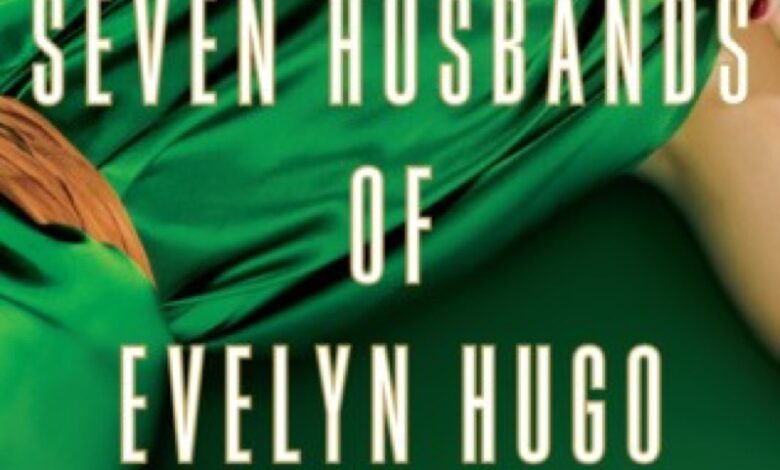
Tracked down the discourse on this one for a few reasons. First, it came out in 2017 and spent years being a perfectly fine book that nobody was losing sleep over. Then BookTok got hold of it, and suddenly The Seven Husbands of Evelyn Hugo was everywhere — crying emoji thumbnails, “this book destroyed me” captions, a Netflix deal. That kind of second-life trajectory tells you something worth investigating.
Second, Netflix officially has a film adaptation in development, director Maggie Betts is attached, and the internet is in full casting chaos mode (Ana de Armas was asked about playing Evelyn in April 2025 and said “I would love that,” which the internet predictably treated as a formal announcement). When a book has that kind of active cultural moment, the reader conversation gets interesting fast.
The Intel
- Book: The Seven Husbands of Evelyn Hugo by Taylor Jenkins Reid
- Published: June 13, 2017 (Simon & Schuster)
- Genre: Historical Fiction / Literary Fiction — standalone
- Goodreads: 4.4 stars, 352,000+ ratings
- Amazon Rating: 4.7 stars (55,000+ ratings)
- Audiobook: Narrated by Alma Cuervo, Julia Whelan, and Robin Miles — available on Audible, runtime 12h 10m, 2018 Audie Award finalist
- Status: Netflix film adaptation in development; Maggie Betts directing
What I Found
I surveyed the landscape of reader opinion on Goodreads, Reddit, and in the broader BookTok-adjacent ecosystem. Here’s what the pattern looks like.
The Hype Is Real — And So Is the Backlash
This is a book with two very distinct reader populations. The first group hits Goodreads and leaves five-star reviews that read like they wrote them at 2am after finishing in one sitting. One highly-upvoted Goodreads review says: “This right here. This is why I read. For the joy and privilege of coming across an exquisite story like this and being swept up in its magic.” Another went to bed at midnight and kept reading until the book was finished, sleep be damned.
The second group shows up on Reddit’s r/books with posts titled “Disappointed with the 7 Husbands of Evelyn Hugo” and lays out a specific complaint: “The lack of ‘show don’t tell’ in this book was honestly infuriating. The author barely showed ANYTHING.” The criticism isn’t that the book is bad — it’s that it doesn’t earn the emotional response it’s clearly engineered to produce. The fact that multiple separate Reddit threads exist for “I didn’t like Evelyn Hugo” — each with hundreds of upvotes — tells you this isn’t just one contrarian. There’s a real constituency for this take.
The BookTok Effect Is Documented
The Irish Times ran a piece in early 2023 specifically calling out Evelyn Hugo as the case study for how BookTok resurrects books: “The Seven Husbands of Evelyn Hugo came out in 2017. BookTok doesn’t care about when books were published. It just cares about what it likes.” The book became a top BookTok recommendation on curated Goodreads lists alongside The Song of Achilles and The Secret History — which tells you exactly what kind of reader it’s being marketed to and what emotional register it’s hitting.
The four-year gap between publication and explosion is interesting intel. It means this book found its audience entirely through word-of-mouth from readers who genuinely loved it, not from a publisher push. That’s a different kind of validation than a debut book blowing up week one.
The Audiobook Is Exceptional
The audiobook consistently comes up in positive reviews as a specific upgrade. AudioFile Magazine called narrator Alma Cuervo’s performance “stand-out,” noting she delivers “desperation, anger, and love” throughout Evelyn’s story. The three-narrator format — Cuervo as Evelyn, Julia Whelan and Robin Miles sharing other roles — was a 2018 Audie Award finalist. For a book structured as a biographical interview, having distinct voices matters. Readers who bounced off the prose version have reported the audio as a different experience worth trying.
The Casting Drama Is Its Own Storyline
Searching Reddit’s r/books and entertainment spaces, the Netflix adaptation discourse is running hot. The internet has strong opinions about who should play Evelyn Hugo (Latina, from Hell’s Kitchen, becomes a 1950s-80s Hollywood icon). Ana de Armas saying she’d “love” the role was fuel enough for weeks of speculation threads. The Netflix Tudum page is light on details, which is driving the speculation further.
What’s Missing
YouTube coverage is relatively thin compared to the Goodreads/TikTok presence. Long-form video essay takes on the novel are rare, which is surprising for a book with this level of discourse. The critical conversation is happening in short-form spaces — comments sections and TikTok videos — rather than in anything that requires sitting with the book’s ideas for twenty minutes. Make of that what you will.
My Analysis
The “show don’t tell” complaint is the central debate. It’s in every critical thread, every disappointed review. Reid’s prose is deliberately compressed — Evelyn narrates decades of her life in summary rather than scene. Some readers find this breezy and fast-moving. Others feel cheated out of the emotional work. Both reactions are valid and both are responding to the same text.
BookTok picked this up because it delivers big emotional payoffs. The book has a reveal structure that genuinely lands, and readers who connect with it are responding to craft, not hype. The 352,000 Goodreads ratings don’t happen by accident. The crying TikTok videos aren’t performance — something in this book is landing for a lot of readers.
The format question is real. The audiobook’s three-narrator setup adds a dimension that the prose alone doesn’t have. Given the interview-style structure, hearing distinct voices for Evelyn and Monique makes the dynamic clearer. If you’re on the fence, the audio version is a legitimate recommendation rather than just an upsell.
The historical period is doing heavy lifting. This spans Old Hollywood from the 1950s through the late ’80s. Reid did enough research that the era feels functional — clothes, industry dynamics, social constraints — even if some critics argued she didn’t dig deep enough into the specific experience of a Cuban-American woman in mid-century Hollywood.
The Netflix adaptation is going to recalibrate this conversation entirely. Books with pending adaptations develop a specific anxious energy in their fan communities — everyone is simultaneously excited and terrified. The casting discourse is already intense. Once a face is put to Evelyn Hugo, expect the Goodreads ratings to shift and the Reddit threads to multiply.
The Question Nobody’s Asking
Why do readers specifically love that Evelyn is morally gray? The five-star reviews almost universally mention Evelyn making terrible choices and being loved anyway. In a genre space where protagonists are often required to be likable or justified, this book seems to give readers permission to root for someone who is explicitly ruthless and frequently wrong. The appetite for that is worth tracking — it says something about what readers are actually hungry for that the market isn’t fully feeding them.
The Verdict
Read if: You want Old Hollywood glamour with actual emotional stakes, you’re fine with a telling-not-showing narrative style, or you need a book that will make other people at the pool visibly concerned about your emotional state.
Skip if: You require scene-level immersion in prose, the “morally gray antihero who suffers beautifully” trope doesn’t do it for you, or you’ve already had three BookTok books disappoint you this month.
Start with the audiobook if: You’re skeptical of the hype — the three-narrator version is the stronger version of this story and the Audie nomination wasn’t a fluke.
Fair warning: This book’s ending has generated its own sub-genre of “I have to talk to someone about this” Reddit posts. Plan accordingly.
The Cocktail
For this one, I’m borrowing the Sidecar from Liquor.com — cognac, Cointreau, and lemon juice, sugar-rimmed coupe glass. The Sidecar was making the rounds in Paris and London in the 1920s and was the height of elegance through the Golden Age of Hollywood. Evelyn Hugo builds her life across exactly that era, and there’s something right about drinking the cocktail that the very people she was pretending to be would have ordered. Aspirational, slightly bitter underneath all the sweetness, and built to look effortless. Sounds about right.
The Bottom Line
Across Goodreads, Reddit, and the BookTok ecosystem, the consensus is that this book delivers a specific emotional experience that either completely works for you or doesn’t land at all — and those camps seem to be determined by how you respond to compressed, tell-heavy biographical prose rather than by the story itself. The story itself is good. Whether the delivery gets out of its own way depends on the reader. The audiobook is the version that gets the most consistent praise, and the Netflix adaptation is generating enough pre-emptive anxiety that now is actually the right time to have an opinion before someone else’s casting choice does it for you.
Got intel I missed? Drop it below. I cover the discourse, not just the back-cover copy — reader experience reports, hot takes, and anything the algorithm buried are all fair game.