
Dark Matter: When Readers Can’t Decide If Blake Crouch’s Multiverse Is Mind-Blowing or Just Overrated
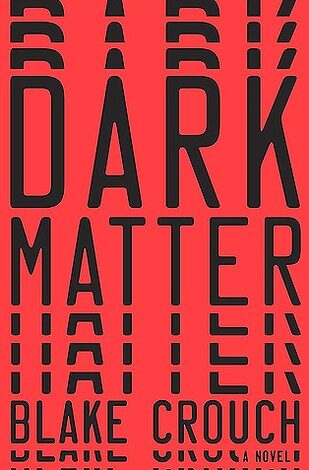
I tracked down what readers are saying about Blake Crouch’s Dark Matter, and here’s where the internet stands on this multiverse mindbender. If you’ve been seeing this book everywhere and wondering whether the hype is real or just another case of BookTok collective delusion, here’s what I found.
This one’s been causing arguments since 2016, and with the Apple TV+ adaptation that just wrapped up, people are revisiting it all over again. Some call it a masterpiece that will rearrange your brain. Others call it pseudoscience wrapped in cheese. I needed to figure out which camp has the receipts.
The Intel
- Book: Dark Matter by Blake Crouch
- Published: July 26, 2016
- Series: Standalone
- Goodreads Rating: 4.11/5 (88.2k+ reviews)
- Amazon Rating: 4.4/5
- Audiobook: Narrated by Jon Lindstrom (available here) — consistently praised as “perfect” for this story
- Genre: Science fiction thriller, multiverse
What I Found
I dug through discussions across Goodreads, Amazon, and Reddit to see where readers actually land on this one. The discourse is messy, which tells you something right there.
The Mind-Blown vs. The Eye-Rollers
On Goodreads, reader Emily May captures the fan perspective: “This book made me feel tiny. It was overwhelming and scary, but oh so very gripping too.” She’s talking about the multiverse concept hitting her hard—the whole “horrifying infinity” angle that Crouch leans into.
But over on Reddit, readers are less charitable. One thread title says it all: “Dark Matter by Blake Crouch is a book that suffers by the recent over-saturation of its subject matter.” The multiverse thing? It’s been done. A lot. And some readers feel like Crouch showed up late to the party with nothing new to say.
The Science: Accessible or Oversimplified?
Here’s where things get interesting. Multiple reviewers specifically call out how “balanced perfectly so that the subject is approachable by readers of all levels and not limited to science nerds.” Translation: You don’t need a physics degree to follow what’s happening. Crouch explains just enough quantum mechanics to make the plot work, then moves on.
But that accessibility cuts both ways. Readers with actual science backgrounds tend to roll their eyes. The explanations are surface-level. The “box” that makes everything possible requires a generous suspension of disbelief. If you’re the type who needs your sci-fi to hold up under scrutiny, you’re going to have problems with this book.
The Audiobook Advantage
If there’s one thing nearly everyone agrees on, it’s that Jon Lindstrom’s narration elevates this book significantly. Goodreads reviewer Jennifer Masterson writes: “The audio narrated by actor, Jon Lindstrom, is as good as it gets! He was born to narrate books!”
Multiple readers report finishing it in one sitting via audio, including one who crushed the entire book during a 5-hour road trip and called it the “perfect” way to experience the story. If you’re on the fence, the audiobook might be your move.
The Dialogue Problem
This is where Crouch loses a chunk of readers. The romantic dialogue gets mocked repeatedly. One reviewer on Goodreads quotes this gem: “It was like I was something, not that you wanted, but that you needed. Like I was your oxygen.” Their reaction? *groan*
Another example that gets roasted: “It was the hottest thing.” Readers who can’t stomach cheesy romance lines will struggle here, because at its core, this is a love story dressed up in quantum mechanics. The protagonist spends the entire book obsessing over getting back to his wife and kid, and Crouch writes those emotions like a Hallmark card discovered theoretical physics.
Reddit’s Reality Check
The most critical Reddit thread I found is titled simply: “Dark Matter by Blake Crouch was just awful.” The complaints pile up: formulaic protagonist, repetitive structure, plot holes you could drive a truck through. One commenter notes that Crouch has now written three books with essentially the same setup—middle-aged white guy gets separated from loving family, spends entire book trying to get back to them.
But even that thread has defenders. Someone jumps in to say Crouch is “successfully taking up the mantle of pseudoscience fiction from the late and inimitable Michael Crichton.” Whether you read that as praise or insult depends entirely on how you feel about Crichton.
My Analysis
This is a summer blockbuster in book form. Turn your brain down a notch, ignore the iffy science, and you’ll have a great time. Try to analyze it too hard and it falls apart. The book knows what it is and commits fully.
The audiobook is doing heavy lifting. Based on the pattern in reviews, people who listened tend to rate it higher than people who read it. Jon Lindstrom’s performance smooths over the clunky dialogue and keeps the pace moving. If you read it in print, you’re going to notice every cheesy line and short paragraph.
Crouch arrived late to the multiverse party. By 2016, we’d already had The Long Earth, we’d seen Everything Everywhere All at Once was coming, Marvel was setting up the multiverse. Readers who’ve consumed a lot of sci-fi in the past decade find this derivative. Readers who don’t read much sci-fi think it’s revolutionary.
The emotional core works for some, not for others. If you’re a parent or deeply value family, the “I’ll cross infinite universes to get back to my people” theme will hit you hard. If you’re cynical about that kind of thing, you’ll find it melodramatic and manipulative.
It’s intentionally divisive. Looking at the rating distribution, this book doesn’t get many 3-star reviews. People either think it’s brilliant or think it’s garbage. There’s no middle ground, which usually means the book has a strong identity—you either vibe with it or you don’t.
The Question Nobody’s Asking
Why does Blake Crouch keep writing the same protagonist? Seriously—multiple Reddit threads point out that his books follow the same formula: guy with family, guy loses family through sci-fi shenanigans, guy fights through sci-fi shenanigans to get family back. Is this his personal anxiety manifesting on the page, or has he just found a profitable formula and stuck with it?
The Verdict
Read if: You want accessible sci-fi that reads like a thriller, you can tolerate some cheese in your quantum mechanics, or you’re curious about multiverse stories but haven’t read many yet.
Skip if: You’ve read a lot of multiverse fiction already, you can’t handle cheesy romantic dialogue, or you need your science to be airtight.
Start with the audiobook if: You’re on the fence. Jon Lindstrom’s narration is the secret weapon that makes this book work for a lot of people.
Fair warning: Apple TV+ adapted this into a series that wrapped in 2024, so spoilers are everywhere. If you care about going in blind, read it soon.
The Cocktail
For this one, I’m borrowing the Multiverse cocktail from Punch—a tropical riff on the 1978 Universe cocktail that uses melon liqueur, white rum, aged aquavit, pineapple, orange, and pistachio orgeat. It’s bright, a little disorienting, and way more complex than it looks. Sound familiar?
The Bottom Line
Readers are split down the middle on whether Blake Crouch delivered a mind-bending masterpiece or a formulaic thriller with delusions of depth. The science is questionable, the dialogue is cheesy, but the pacing is relentless and the audiobook slaps. Your mileage will vary wildly depending on how much sci-fi you’ve already consumed and how you feel about a physics professor who describes his wife as “his oxygen.”
That’s what I found. If you’ve read Dark Matter and have intel I missed—especially about whether the Apple TV+ series is worth the watch—I’m all ears. You know the drill: evidence-based takes only, no vibes.